
 Monday - Friday 9am - 9pm. Saturdays 9am - 7pm. Sunday 9am - 3pm.
 Email:
  (469)917-8363
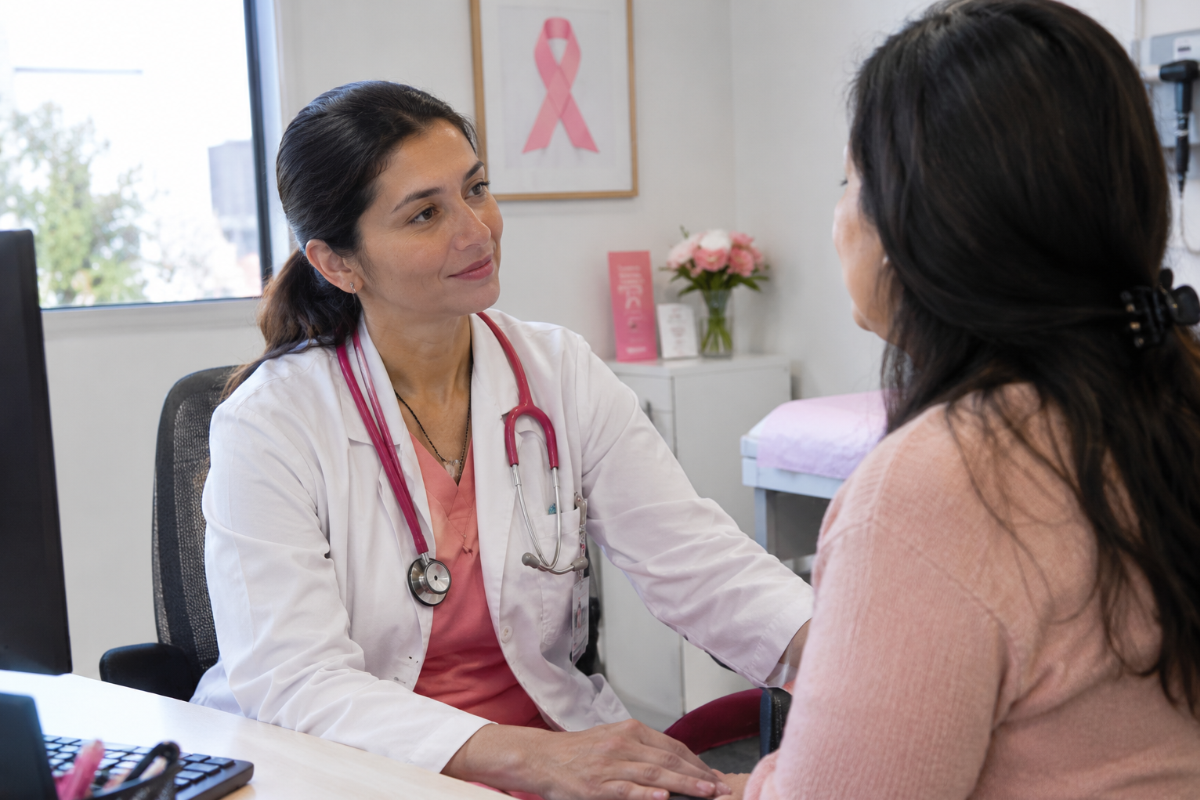
Knowing your breasts can save your life. At Clinica Hispana Vida Sana, we see many women who say, “I felt something unusual months ago, but I thought it was nothing.” Between work, children, and home, it is easy to put our health off. But with breast cancer, time matters.
Finding it early is more than a phrase: it can make a major difference. We are not asking you to become a doctor; we invite you to know your body so that no new change goes unnoticed.
Your Body Speaks. Do You Know How to Listen?
Your breasts have never been exactly alike. They change with your period, age, pregnancy, breastfeeding, and weight changes. That can be normal. What deserves attention is a change that is new for you.
To notice it, you need to know how you normally look and feel. During this prevention month, we share five minutes of observation that can help you act in time.
5 Steps to Know Your Breasts Better
1. Look at Yourself in the Mirror
With your arms relaxed, look for a new change in size or shape, dimpling of the skin, redness that does not go away, or changes in nipple color. A small difference between one breast and the other can be normal; a new change deserves attention.
2. Change Positions
Place your hands on your waist, turn gently, and then raise your arms. This can make swelling, dimpling, or a texture that resembles orange peel easier to notice. If it appears and does not go away, do not ignore it.
3. Check Your Nipples
Pay attention if a nipple has started to turn inward, if there is flaking, crusting, or irritation that does not heal, or if fluid comes out without squeezing it, especially if it is bloody or only on one side. It can have different causes, but it always deserves an evaluation.
4. Feel Your Breasts Calmly, Without Fear
In the shower, standing, or lying down, use the pads of three fingers and make small, orderly movements. Cover the entire breast, from the collarbone downward and from the center of the chest to the armpit. Do not try to do it perfectly: focus on knowing what is normal for you.
5. Lie Down and Repeat
With one arm behind your head, feel your breast with the opposite hand. This position can help you notice small changes. Include your armpits as well.
A change does not mean cancer, but it does deserve an evaluation by a healthcare professional.
What Should You Not Ignore?
Schedule an evaluation if you notice any of these changes:
- A new lump in the breast or armpit.
- An area that feels harder or thicker.
- Skin dimpling or skin with an orange-peel appearance.
- Redness, flaking, or crusting that does not improve.
- A nipple that suddenly turns inward.
- Spontaneous discharge, bloody discharge, or discharge from only one side.
- A sudden change in the size or shape of one breast.
- Localized pain that does not go away.
- Any change that concerns you.
If you also have intense redness, warmth, fever, or rapid swelling, seek care promptly. It is not always cancer; sometimes it may be an infection that needs immediate treatment.
Self-Checks Are the Beginning, Not a Replacement for Your Checkup
Most lumps can be caused by cysts, hormonal changes, or other benign conditions. Only a healthcare professional can guide you. Do not diagnose yourself or wait to see whether the change goes away.
Knowing your breasts can help you seek care in time, but it does not replace medical evaluation or the tests appropriate for you. Mammograms and other exams can find changes that your hands and eyes cannot yet detect. The age to begin, the frequency, and the tests you need depend on your age, family history, and medical history.
Schedule Your Breast Checkup Today
Has it been more than a year since your mammogram? Have you noticed a change and are not sure whether it is normal? At Clinica Hispana Vida Sana, our team of women speaks your language and guides you according to your age and medical history. Do not put it off.